The Pentagon is signaling that the “pause” with Iran could end fast—and that U.S. Navy ships may be ordered to stop vessels bound for Iran, even in Iranian waters, if Tehran won’t sign a deal.
Quick Take
- U.S. military leaders say forces in the Middle East are positioned to resume major combat operations “at a moment’s notice” if Iran rejects a peace deal.
- Officials described a naval blockade posture that would allow U.S. ships to intercept Iran-linked maritime traffic after warnings, escalating to force if needed.
- President Trump extended a ceasefire at Pakistan’s request, while emphasizing U.S. readiness during the extension.
- The buildup is described as the largest U.S. military posture in the region since the 2003 Iraq invasion, raising the stakes for deterrence and miscalculation.
What U.S. officials say the military is prepared to do
Gen. Dan Caine, the Chairman of the Joint Chiefs of Staff, told reporters in Washington that U.S. forces in the Middle East are positioned to restart “major combat operations” on extremely short notice if Iran refuses to agree to a peace deal. Officials also outlined enforcement rules for a naval blockade posture: warships would warn vessels and then, if those vessels did not comply, could escalate to the use of force.
That combination—ceasefire on paper, pressure at sea in practice—helps explain why this story is landing with such force. A blockade is not a routine patrol. It is an overt attempt to deny an adversary economic oxygen and military resupply routes, and it pushes decision-making down to commanders and crews who may have only minutes to interpret intent, comply with rules, and avoid a spiraling clash.
How the ceasefire extension fits into the pressure campaign
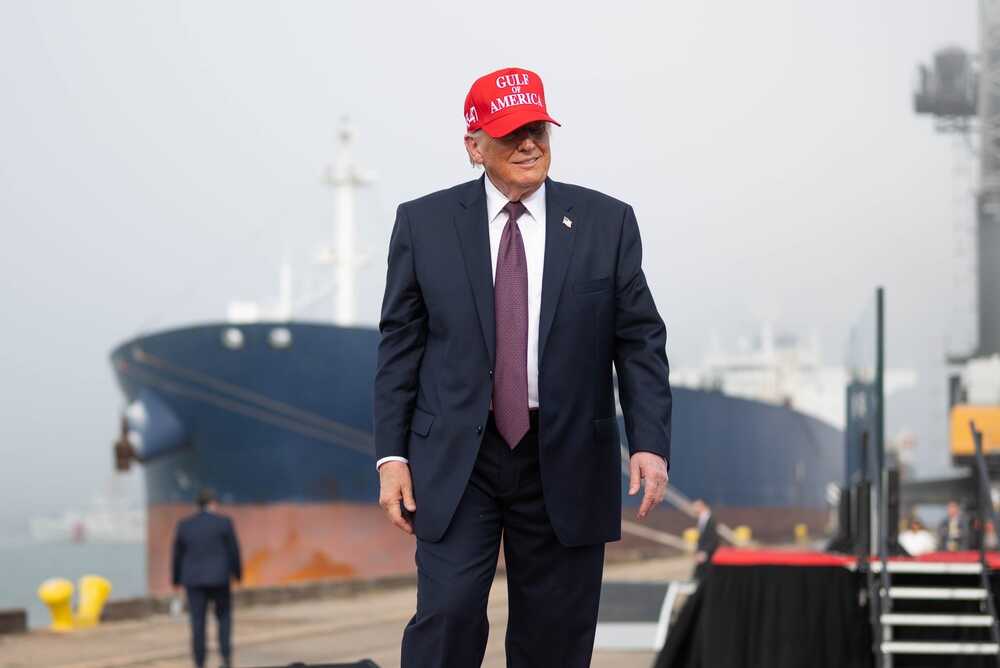
President Trump announced an extension of the ceasefire with Iran at Pakistan’s request, pairing the diplomatic headline with a reminder that U.S. forces would remain “ready and able” during the pause. The sequence matters: an extended ceasefire can buy time for talks, but it can also become a bridge into tougher coercive steps designed to force an agreement. Reporting indicates the blockade posture is part of that leverage strategy.
For Americans exhausted by years of foreign-policy drift, the administration’s messaging aims to project clarity: the U.S. is willing to negotiate, but it is also willing to enforce consequences. Critics on the left often view such pressure as escalatory, while many on the right argue deterrence only works if it is credible. The underlying problem is that credibility is expensive—and prolonged Middle East deployments test readiness, budgets, and public patience.
Blockade enforcement raises high-stakes legal and operational questions
Officials indicated U.S. Navy vessels could intercept ships entering or leaving Iran, including actions that reach into Iranian territorial waters. That is a significant claim because it implies enforcement beyond the open sea and into zones where a coastal state normally asserts strong control. Even with warnings-first procedures, the risk is not theoretical: one misread radio call, one panicked maneuver, or one disputed boarding could ignite a clash that outruns Washington’s intent.
Conservatives who prioritize strong national defense may welcome a posture that tries to prevent Iran from funding proxies or advancing military capabilities. At the same time, limited-government voters tend to ask the hard question: what is the defined end state, and what happens if enforcement becomes an open-ended commitment? The reporting available so far does not spell out a detailed timeline, the specific terms demanded of Iran, or the conditions for lifting maritime restrictions.
The broader buildup signals deterrence—but also strains a public losing trust
Separate coverage and video reporting describe the current U.S. posture as the largest military buildup in the Middle East since the 2003 Iraq invasion, with additional reinforcements arriving in recent weeks. That scale is meant to deter Iran from testing the ceasefire and to give negotiators leverage. But it also reinforces a grim reality many voters on both sides share: Washington repeatedly finds itself managing crises that never seem to end.
That shared frustration feeds today’s “elite” distrust. Many Americans—conservative and liberal—believe career institutions protect themselves first and citizens second, whether the issue is war, debt, border enforcement, or energy prices. The Iran situation fits that broader pattern: decisions are made far from the kitchen-table concerns of inflation and wages, yet any escalation could hit those concerns immediately through shipping disruption and energy-market volatility.
What to watch next as the ceasefire remains fragile
Reporting as of mid-April indicated no announced peace deal and no confirmed return to open combat, but the blockade posture suggests the window for miscalculation is wide. The next key signals will be practical, not rhetorical: whether Iran-linked shipping challenges interdictions, whether any vessel is stopped after refusing orders, and whether diplomatic channels (including Pakistan’s involvement) can convert the ceasefire extension into a durable agreement.
Until more details are public, readers should treat sweeping claims—on either side—cautiously. The clearest verified facts in the available reporting are the U.S. military’s stated readiness, the described intercept-and-escalate rules, and the president’s ceasefire extension tied to Pakistan’s request. Everything else hinges on events at sea and on political choices that, in the past, Washington has not always managed with the discipline Americans expect.
Sources:
US says its forces ready to restart combat if Iran doesn’t agree to deal
Trump says the US will extend its ceasefire with Iran at Pakistan’s request