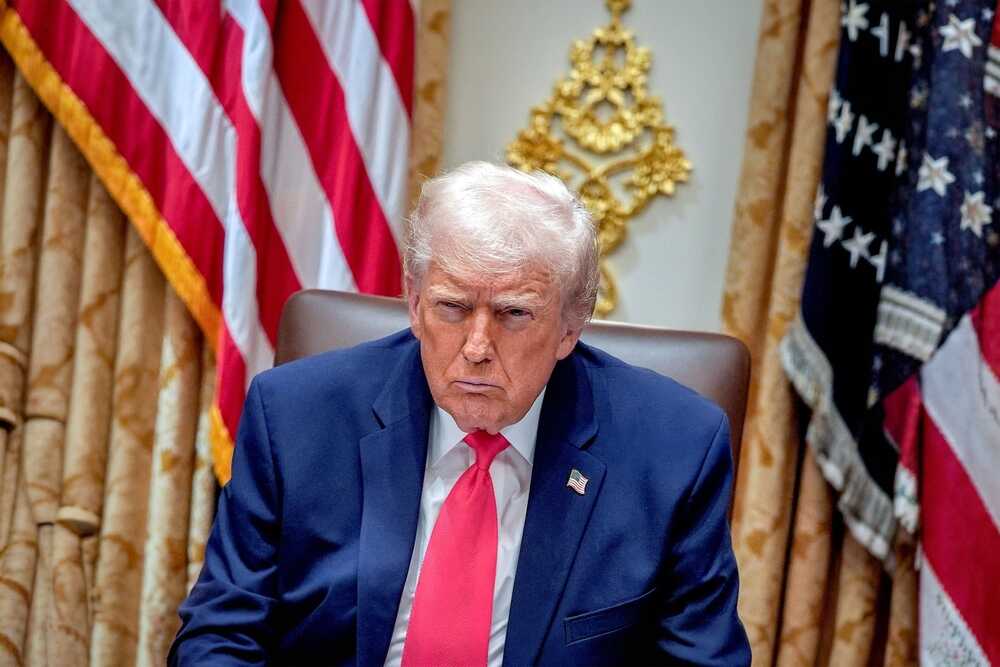
A proposed Trump coin for America’s 250th birthday is reopening an old republic-versus-strongman argument—because once a leader’s face moves from rallies to money, the symbolism stops being small.
Story Snapshot
- The U.S. Commission of Fine Arts unanimously approved a proposed 24-karat gold commemorative coin featuring President Trump for possible 2026 minting tied to the Declaration’s 250th anniversary.
- The design reportedly breaks with modern U.S. convention by depicting a living president and uses unusual, confrontational imagery rather than a traditional profile.
- The U.S. Mint still must decide key specifications, including denomination, dimensions, and how many coins—if any—are produced.
- Commentators are drawing explicit parallels to ancient Rome, where putting Julius Caesar’s likeness on coins became a major political symbol during the Republic’s unraveling.
Design Approval Sets the Stage for a 2026 Mint Decision
The U.S. Commission on Fine Arts has approved a proposed Trump commemorative coin design described as a 24-karat gold piece intended to mark the 250th anniversary of the Declaration of Independence in 2026. The approval is not the final production step. The U.S. Mint still controls whether the coin is minted and must determine the denomination, physical specifications, and total production quantity.
That sequencing matters because it separates symbolism from execution. Approval elevates the concept into an official pipeline, while the Mint’s pending decisions determine whether the design becomes a widely seen commemorative item or remains a proposal. With the nation already politically polarized, the process itself—who signs off, what standards apply, and how quickly decisions move—has become part of the public debate.
A Frontal Trump Portrait and “Fight” Messaging Break Numismatic Norms
Reporting on the design describes a frontal Trump image leaning over a desk with closed fists, staring directly outward—an approach that departs from the traditional profile portrait used on many historical coins. The reverse reportedly shows an eagle in flight without the customary olive branch and includes the words “fight, fight, fight.” Observers argue these visual choices communicate confrontation and strength rather than continuity and civic restraint.
For Americans who care about constitutional guardrails, the immediate question is not whether a commemorative coin is “cool,” but what message it normalizes when state-approved art adopts overtly combative slogans and iconography. The sources also describe a legal gray area: even if the proposal does not technically violate certain statutes, it still clashes with a long-running American convention against placing living people—especially sitting presidents—on official currency-like items.
The U.S. Tradition Avoids Living Faces on Currency for a Reason
American political culture has historically resisted personalizing state power, especially in ways that resemble monarchies. The provided research cites a long-standing policy prohibiting the likeness of living people on certain categories of U.S. financial instruments, reinforcing a broader tradition: national symbols should represent the country and its principles, not serve as a rolling billboard for whoever holds office. That norm aims to keep institutions bigger than personalities.
Supporters may view the proposal as a patriotic collectible for the Semiquincentennial, and critics may see it as an unnecessary departure from republican modesty. The strongest factual point in the research is narrow but important: this is not merely another campaign product. It is an officially approved design in a federal process, which means the “branding” conversation shifts from private merchandise to how government symbolism is curated.
Why Julius Caesar Keeps Coming Up in the Coverage
Multiple sources explicitly compare the proposed Trump coin to late Roman Republic precedents. Roman money once featured gods and allegories, but political leaders began appearing while still alive, including Sulla in 82 BCE and later Julius Caesar. Caesar’s image on coins in 44 BCE, paired with titles signaling extraordinary authority, became a widely circulated symbol of personal dominance at a time when republican customs were under strain.
The historical parallel is not proof that America is Rome, and the research does not establish a direct causal chain from coin imagery to institutional collapse. What it does show is why historians treat coinage as political communication: currency travels everywhere and turns ideology into something people handle daily. That is why critics argue that putting a living leader on a nationally themed coin risks shifting attention away from founding principles and toward the cult of personality.
Open Questions: How Many Coins, What Authority, and What Precedent?
The most concrete unanswered questions are administrative: whether the Mint will produce the coin at all, what denomination it will carry, and how widely it would be distributed if minted. Those details determine practical impact. A limited commemorative run aimed at collectors carries different cultural weight than a mass-produced item that becomes common in daily commerce, and the research indicates those choices remain undecided.
At minimum, the proposal tests a boundary many Americans thought was settled—keeping living political power at arm’s length from official national symbolism. In a country still recovering from years of inflation, border chaos, and aggressive cultural politics, even small-seeming symbolic fights can turn into big trust issues. If the goal is to honor 1776, the safest path is clarity: transparent rules, restrained symbolism, and institutions that don’t look personalized.
Sources:
Donald Trump on a coin? When Julius Caesar tried that, Roman Republic crumbled soon after
Trump’s Face On A US Coin? 24-Karat Gold Design Raises Legal Questions And Julius Caesar Comparisons
Trump’s meme coin is nothing new: it takes a page out of the ancient world’s playbook
How the age of Trump is reflected in Julius Caesar’s Roman coins