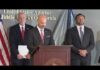

A new “attack on one is an attack on all” pact binds Saudi Arabia, Turkey, and Pakistan, reshaping regional security in a single stroke.
Story Highlights
- Leaders signed the Mecca Joint Defense Agreement with a mutual-defense clause.
- Defense ministries plan joint drills and industry cooperation across land, sea, and air.
- Officials say the pact is defensive and not aimed at a single country.
- The accord builds on a 2025 Saudi-Pakistan framework, now widened to three.
What Was Signed, Who Signed It, and Why It Matters
Saudi Arabia, Turkey, and Pakistan signed the Mecca Joint Defense Agreement on August 7, 2026, in Mecca. Leaders said an armed attack against any one of the three will be treated as an attack on all, with the stated goal to strengthen collective deterrence against aggression. The agreement reflects a drive for stronger regional self-defense during a period of conflict and volatility. All three governments framed the move as a way to boost stability while signaling unity against would-be aggressors.
The signing involved top leaders and came with clear collective-defense language that multiple outlets reported consistently. The wording aligns across major sources and repeats the core idea of shared response to attack. Public statements also emphasize the pact’s defensive posture rather than an offensive tilt. This shared message suggests the three capitals want deterrence without promising automatic war in every scenario, a common pattern in regional security arrangements.
How the Pact Will Work: Mechanisms and Military Cooperation
Turkey’s defense ministry outlined follow-on steps to turn words into cooperation. The three countries plan strategic coordination that links defense ministers, foreign ministers, and chiefs of their armed forces. They will hold joint exercises on land, sea, and in the air, and expand defense-industry work, logistics, and technology links. Those steps aim to improve interoperability and readiness so forces can move faster if threats rise. The approach mirrors standard alliance building: train together, plan together, and equip together.
Officials in Ankara also stressed the agreement is not aimed at Iran or any specific country. They described it as a defensive shield and a signal to lower risk, not raise it. That message may help reduce immediate friction while still warning hostile actors that aggression will face a united front. The balance between deterrence and reassurance is delicate. The governments are betting that steady drills and closer planning will make their message believable without provoking a spiral.
What It Builds On and What Is Still Not Public
Reporting indicates the Mecca pact builds on a Saudi-Pakistan defense framework signed in September 2025, now expanded to include Turkey. That history helps explain how the parties moved so quickly to a trilateral signature. Prior defense ties gave them shared habits, trust, and channels. The new layer formalizes a bigger umbrella while pointing to broader cooperation on training and industry. It sets a path for regular meetings and practical steps that can keep momentum going.
Egypt says it's studying joining Mecca defense pact
Egyptian FM Abdelatty said Thursday that Cairo is examining the legal and constitutional requirements to join the Saudi-Turkey-Pakistan alliance.
— Shahid (@BinQasimRaja1) August 16, 2026
The full treaty text has not been published in those reports, so specific activation rules and exact obligations are not in public view. Governments often release principles first and roll out procedures later. That is common in the region, where leaders want deterrence and flexibility at the same time. For American readers, the headline is simple: three major Muslim-majority states just pledged to stand together if attacked. That changes calculations for adversaries and partners alike.
Sources:
pbs.org, washingtonpost.com, dw.com, aljazeera.com