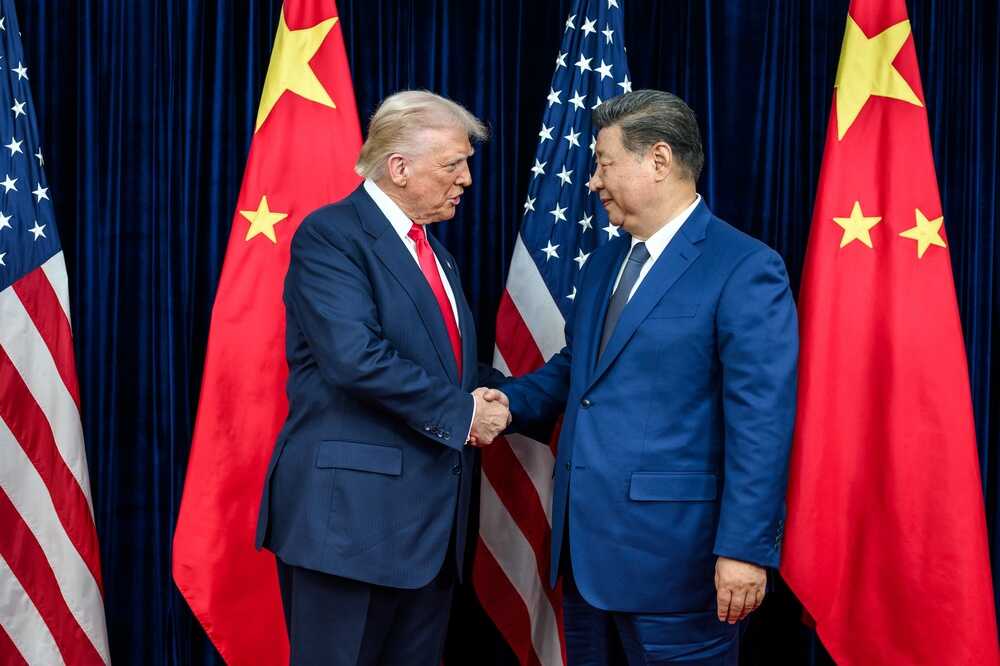
China’s rise has not simply challenged America; it has helped redefine the global contest into a hard-edged struggle over technology, trade, and power that looks far closer to a new Cold War than many Washington insiders want to admit.
Quick Take
- Researchers and policy writers increasingly describe the U.S.-China rivalry as “Cold War 2.0” or a “new Cold War.” [1][2][5]
- Technology, especially semiconductors, artificial intelligence, and digital networks, is treated as the main battlefield. [2][5]
- China is portrayed as a rival seeking to reshape the world order, not merely compete inside it. [4]
- At the same time, the case for calling this a true Cold War remains contested because the two economies are deeply intertwined.
Technology Became the New Front Line
The literature in your research set places technology at the center of the rivalry, with semiconductors, data, fifth-generation mobile networks, internet standards, artificial intelligence, and quantum computing identified as the decisive arenas.[2][4] That matters because modern power now depends on control over chips, cloud systems, and advanced research, not just tanks and missiles. The result is a competition that reaches into the core of industry, finance, and national security.[1][2]
One of the clearest reasons the “Cold War 2.0” label persists is that both sides are trying to deny the other strategic advantages while protecting their own supply chains.[1][2] The journal material in your package describes a race for technological supremacy and notes U.S. efforts to throttle China’s access to vital components and technologies.[2] In conservative terms, this is the kind of hard-nosed state competition that rewards self-reliance, domestic production, and strong industrial policy.
China Uses Economic Power Like A Strategic Weapon
Your research also shows why many analysts see China as more than a commercial rival.[1] One source says Beijing weaponized rare-earth exports against the United States, leaving manufacturers scrambling and overpaying.[1] The same material says China froze purchases of U.S. soybeans in 2025 and shifted buying toward Brazil and Argentina while using renminbi settlement, which the source characterizes as economic warfare.[1] That kind of leverage is a reminder that dependence on hostile supply chains is a national weakness.
Other sources argue that China is pursuing influence across global networks rather than through the territorial model associated with the Soviet Union.[2][5] The rivalry is described as one over the flow of goods, information, and capital, with China seeking to place itself at the center of the world order.[4] That framing helps explain why Beijing’s push extends well beyond military pressure and into ports, infrastructure, finance, and digital systems.[1][4]
Why The Soviet Comparison Helps, And Where It Breaks Down
The comparison to the Soviet Union captures real strategic behavior, but the record you supplied also shows why the analogy has limits. One source says the United States and China remain deeply intertwined economically, technologically, and financially even while they posture against each other militarily. That interdependence makes this rivalry different from the more sealed-off U.S.-Soviet confrontation, where trade ties were far weaker and ideological blocs were cleaner.[5]
That distinction matters for readers trying to separate useful analysis from hype. The term “Cold War 2.0” is widely used in commentary, but the evidence in your research package also shows disagreement over whether it is the right label.[2][4] Some sources treat it as the most accurate shorthand for systemic rivalry, while others warn that deep interdependence, alliance politics, and economic complexity make the comparison incomplete. The safest reading is that China is America’s principal long-term rival, but not a perfect Soviet replacement.
Sources:
[1] Web – Cold War 2.0: How China Smartly Replaced the Soviet Union
[2] Web – The Rise and Fall of a New Cold War: The US–China Great Power …
[4] Web – The US-China rivalry: Cold War 2.0 | Opinion – Daily Sabah
[5] Web – Cold War 2.0? Essential Readings on the New Systemic Conflict 12/20