While Americans struggle with sky-high energy prices and the costs of an Iranian conflict that Trump promised we’d never fight, France is pouring billions into an 80,000-ton nuclear supercarrier that showcases exactly the kind of strategic independence and energy dominance our leaders abandoned.
Story Snapshot
- France’s new PANG carrier will displace 80,000 tons and feature U.S. electromagnetic launch systems, rivaling American and Chinese naval power
- The nuclear-powered vessel named “France Libre” demonstrates European strategic autonomy while Americans foot the bill for endless Middle East wars
- Projected €10-15 billion cost raises questions about NATO burden-sharing as France builds power projection capabilities
- Commissioning slated for 2038 with 50-year service life, while U.S. maintains global military commitments draining taxpayer resources
France’s Nuclear-Powered Naval Ambitions
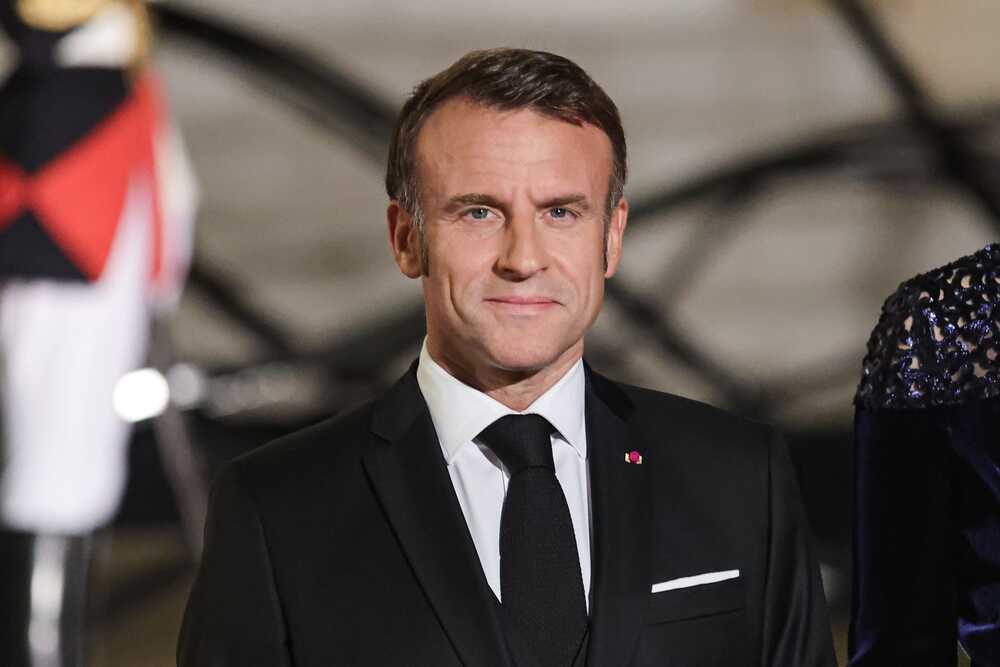
President Emmanuel Macron officially designated France’s next-generation aircraft carrier as “France Libre” (Free France), evoking World War II resistance symbolism while positioning his nation for decades of autonomous military power. The Porte-avions de nouvelle génération (PANG) will displace approximately 80,000 tons at full load, measuring 310 meters in length with an 80-90 meter beam. Naval Group and TechnicAtome began procuring components for the K22 nuclear reactor system in 2024, with the keel-laying scheduled for 2032, sea trials in 2036, and full commissioning in 2038. This massive investment in strategic independence stands in stark contrast to American entanglement in conflicts that drain resources without serving national interests.
Billion-Dollar Investment in European Defense Autonomy
The PANG program carries an estimated price tag between €10-15 billion, funded entirely by French taxpayers seeking to replace the aging Charles de Gaulle carrier commissioned in 2001. France secured U.S. electromagnetic aircraft launch systems (EMALS) and advanced arresting gear from General Atomics through Foreign Military Sales agreements, integrating American technology while maintaining nuclear propulsion capabilities unique to French and U.S. navies. The carrier will support 30-40 aircraft including the Next Generation Fighter developed jointly with Germany and Spain under the Future Combat Air System program. This capability enables France to project power across the Indo-Pacific, Atlantic, and Mediterranean for 50-plus years without refueling, leveraging nuclear energy advantages that American policymakers increasingly ignore domestically while subsidizing foreign defense initiatives.
Strategic Implications for NATO Burden-Sharing
The K22 reactor system will generate approximately 220 megawatts of electrical power, enabling electromagnetic catapults capable of launching heavier aircraft and potentially directed-energy weapons in future configurations. France’s commitment to this platform demonstrates European willingness to invest in hard power capabilities while questions persist about equitable NATO defense spending. The PANG will rival China’s Fujian carrier at approximately 80,000 tons, though remaining smaller than America’s Ford-class vessels exceeding 100,000 tons. Infrastructure upgrades at Toulon naval base are required because existing dry docks at 40 meters wide cannot accommodate PANG’s expanded beam, adding further costs to an already substantial investment. These developments highlight how European nations pursue strategic interests through calculated defense spending while Americans bear disproportionate costs for collective security arrangements.
French Naval Supremacy Versus American Overextension
The France Libre will operate with unlimited range thanks to nuclear propulsion, achieving speeds of 27 knots while maintaining global deployment capabilities that support French interests in contested waters. Construction will generate thousands of shipbuilding jobs through Naval Group, boosting domestic manufacturing in ways American defense spending increasingly fails to achieve as contracts flow to multinational corporations. The carrier’s integration of U.S. EMALS technology enables interoperability with American naval forces during joint exercises, theoretically strengthening NATO maritime capabilities. However, this Franco-American cooperation underscores uncomfortable realities: France invests in sovereign power projection serving national interests, while America exhausts blood and treasure in Middle Eastern quagmires that benefit neither energy security nor strategic positioning. The contrast between French focus on measurable military assets and American involvement in regime-change operations reveals fundamentally different approaches to national defense and resource allocation that should concern every taxpayer funding Washington’s priorities.
80,000 Tons: France’s New PANG Nuclear Aircraft Carrier Has a Message for NATO and Russiahttps://t.co/ntZNKV8av2
— 19FortyFive (@19_forty_five) March 24, 2026
The PANG program demonstrates how nations serious about sovereignty invest in tangible capabilities rather than endless foreign interventions. As France prepares for decades of autonomous naval power, Americans deserve leadership that prioritizes strategic independence, energy dominance, and fiscal responsibility over conflicts that serve globalist agendas while undermining the prosperity and security Trump supporters were promised.
Sources:
80,000 Tons: France’s New PANG Nuclear Aircraft Carrier Has a Message for NATO and Russia
France PANG Nuclear Aircraft Carrier 78000 Tons US Navy
France New Nuclear Aircraft Carrier PA-NG
78,000 Tons: France’s New PANG Nuclear Aircraft Carrier Has a Message for the U.S. Navy
PANG Carrier France Builds Europes Largest Warship to Secure Strategic Autonomy
In Focus Frances Future Aircraft Carrier
France Willing to Spend Big on PANG Aircraft Carrier for One Good Reason
France to Build Large New Nuclear Aircraft Carrier