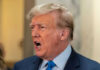
Donald Trump warns that New Jersey will become a “hotbed of crime” with “skyrocketing energy prices” if Mikie Sherrill is elected.
Story Snapshot
- Trump claims New Jersey faces rising crime and energy costs if Democrat Mikie Sherrill wins statewide office.
- Official crime statistics show New Jersey’s crime rates are at historic lows, contradicting campaign warnings.
- Energy prices in the state mirror national trends, with no evidence of a state-specific crisis.
- The debate underscores a widening gap between public perception and verified data, fueling campaign polarization.
Trump’s Warning: Crime and Costs as Key Election Issues
During a pivotal 2025 campaign rally in New Jersey, Donald Trump declared that electing Democrat Mikie Sherrill would turn the state into a “hotbed of crime” and trigger “skyrocketing energy prices.” This message, delivered before an energized crowd, sought to rally conservative voters by focusing on public safety and the high cost of living—issues that consistently resonate with Americans frustrated by years of perceived mismanagement, rising expenses, and threats to core values. Trump’s remarks quickly spread across local and national media, amplifying anxieties about safety and economic stability at a time when the electorate is highly polarized.
Trump warns New Jersey faces hotbed of crime, skyrocketing energy prices if Mikie Sherrill elected #MAGA #tcot https://t.co/agQmNJeu1k
— ULTRAMAGA NEWS ✍🏻 Maskless in Fascist Minneapolis (@marypatriott) October 27, 2025
Sherrill’s campaign, joined by independent fact-checkers and law enforcement officials, pushed back by citing the latest data: New Jersey’s violent and property crime rates have fallen to historic lows in 2024 and 2025. FBI Uniform Crime Reporting and New Jersey State Police records confirm that major cities like Newark and Jersey City are experiencing some of their safest years on record.
Energy Prices: Fact vs. Political Messaging
Trump’s warning of “skyrocketing energy prices” reflects broader Republican concerns about economic hardship under Democratic leadership. However, energy price data for New Jersey reveals no evidence of a unique state crisis. Like much of the Northeast, New Jersey’s energy costs are shaped by regional market factors, federal policy, and infrastructure—not by state-level mismanagement. While volatility has affected national energy prices since the pandemic, there is no support for the notion that electing Sherrill would trigger disproportionate increases for New Jersey families.
Campaign Rhetoric vs. Data: Impact on Public Perception
The ongoing dispute over crime and energy prices in New Jersey highlights a deeper divide between perception and reality. Multiple independent analyses and official reports confirm that New Jersey’s crime rates are among the lowest in the nation and continue to decline. Nonetheless, polls show that public anxiety about crime and costs remains widespread, fueled by campaign ads and partisan talking points. This disconnect has political consequences: candidates who successfully stoke fear may sway undecided voters, but risk eroding trust in public institutions and alienating moderates if their claims are widely debunked.
Conservative Values and the Path Ahead
For conservatives, the stakes in New Jersey’s 2025 election remain high. The persistent threat of policies that could erode constitutional protections, family values, and economic stability drives engagement and vigilance. Yet, the facts on crime and energy costs demand careful scrutiny of campaign claims. While Trump’s warnings may energize the base and keep pressure on Democratic candidates, the data offers a different story—one that calls for both skepticism of political narratives and renewed commitment to transparency and accountability.
Sources:
Crime Dropped In New Jersey Last Year, Latest FBI Data Shows
Department of Law & Public Safety Releases Latest Crime Data
New Jersey State Police: Current Crime Data