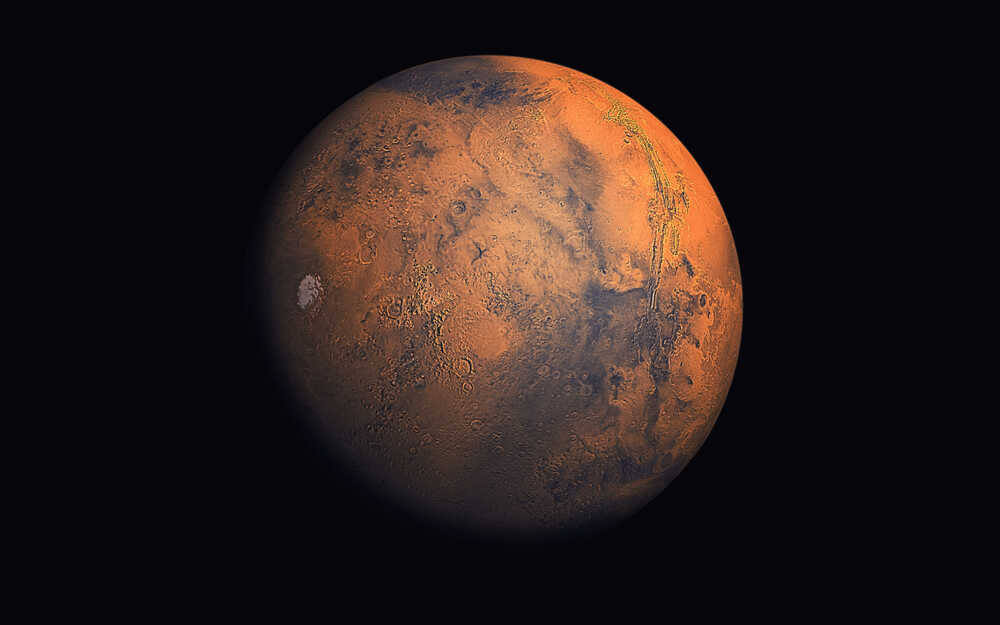
NASA Rover Discovery on MarsNASA’s recent discovery on Mars suggests potential signs of past life, captivating both scientists and the public.
Story Highlights
- NASA’s Perseverance rover finds potential biosignatures in a Martian rock.
- The discovery is considered the strongest evidence yet of ancient life on Mars.
- Further analysis is needed to confirm the biological origin of these markers.
NASA’s Groundbreaking Discovery
NASA announced that its Perseverance rover has detected potential biosignatures in a Martian rock named “Cheyava Falls,” located in Jezero Crater. This discovery could be indicative of ancient microbial life, marking a significant milestone in Mars exploration. The sample, collected in 2024, has been described as the clearest evidence yet of life on Mars. However, scientists caution that more detailed analysis is required to confirm these findings.
The Perseverance rover, which landed on Mars in February 2021, has been exploring Jezero Crater due to its historical significance as an ancient river delta. The area is believed to have once hosted liquid water, a crucial element for life. The findings were publicly announced on September 10, 2025, and have been published in the journal Nature, drawing widespread attention from both the scientific community and the general public.
Watch:
The Importance of Jezero Crater
Jezero Crater was strategically chosen as the landing site for Perseverance due to its potential to harbor signs of past life. The crater’s ancient river delta and sediment deposits make it an ideal location for such discoveries. This site has been the focus of planetary scientists for decades, building on previous missions that found organic molecules and evidence of ancient habitable conditions.
The rover’s discovery is part of a long history of Mars exploration, including the controversial findings of the Viking landers in 1976 and the Curiosity rover’s detection of organic compounds. Each step has brought scientists closer to understanding Mars’ potential to support life, with “Cheyava Falls” representing a significant leap forward.
Nasa rover makes discovery that hints at past life on Mars
Source: The Independent https://t.co/pETPyXqUMI— Hood Ross (@Hoodie_Ross) September 10, 2025
Future Plans and Implications
Despite the excitement surrounding the discovery, NASA officials stress the importance of further study. The rover’s current instrumentation limits the extent of analysis that can be performed on Mars. Plans are underway for a Mars Sample Return mission, which would bring Martian samples back to Earth for more comprehensive investigation.
The implications of confirming life on Mars are vast, potentially reshaping our understanding of life in the universe. The discovery could lead to increased funding for Mars exploration and space missions, as well as renewed interest in astrobiology. The scientific community and space agencies worldwide are closely monitoring the developments as they unfold.
Sources:
ABC News: Rock found on Mars with evidence of ancient life, NASA says
NASA: Mars rover discovered potential biosignature last year
Space.com: Did NASA’s Perseverance rover find evidence of ancient Red Planet life?
The Planetary Society: NASA Perseverance found possible biosignatures in Martian rock