

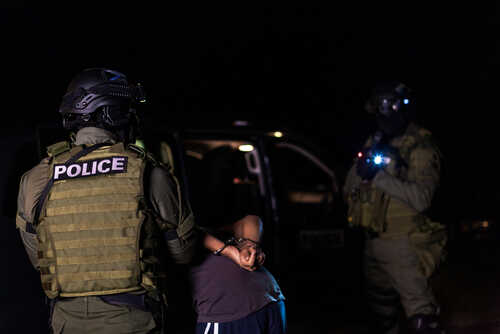
The recent arrest of nearly 1,400 criminal aliens in Houston has triggered the creation of a Homeland Security Task Force, marking a pivotal moment in the fight against transnational crime.
At a Glance
- ICE Houston arrested 1,400 criminal aliens in June 2025, exposing the severity of transnational crime.
- The Homeland Security Task Force (HSTF) aims to combat transnational criminal organizations in Southeast Texas.
- HSTF integrates federal, state, and local agencies for a unified law enforcement approach.
- The task force’s creation follows a presidential executive order to protect U.S. citizens from criminal incursions.
A New Era in Houston’s Crime Fighting
In July 2025, the announcement of the Homeland Security Task Force (HSTF) brought a wave of hope to Houston. Co-led by ICE Homeland Security Investigations (HSI) and the FBI, this task force aims to dismantle Transnational Criminal Organizations (TCOs) that have long plagued the region. The HSTF’s formation is a direct response to the arrest of 1,400 criminal aliens in June, which underscored the urgent need for a coordinated law enforcement effort.
WOW. ICE has arrested 1,361 criminal illegal aliens in the Houston area ALONE during the month of June.
Arrests included 32 child predators, 9 murderers, 16 gang/cartel members, and one illegal convicted for hijacking a plane.
This is what I voted for! pic.twitter.com/tgejm7qrkz
— Libs of TikTok (@libsoftiktok) July 14, 2025
Houston’s strategic location near the U.S.-Mexico border makes it a hotspot for drug trafficking and other criminal activities. The HSTF represents a comprehensive, multi-agency approach to tackling these issues, drawing from the expertise of various federal, state, and local agencies. The task force is expected to usher in a new era of crime fighting, focusing on intelligence-driven investigations and collaborative efforts.
The Stakes and the Players
The key stakeholders in the HSTF include ICE, the FBI, DEA, ATF, U.S. Marshals, and local law enforcement agencies. These entities are united by a common goal: to disrupt and dismantle the operations of TCOs like the CJNG, MS-13, and others. This unprecedented unity among law enforcement agencies is a testament to the gravity of the threat posed by transnational crime.
The task force is led by Chad Plantz of HSI and Douglas Williams of the FBI, both of whom have emphasized the importance of a transformative approach to combating TCOs. Their leadership is backed by a regional executive committee that provides strategic counsel, ensuring that the HSTF remains focused and effective.
Watch: More than 1,300 migrants arrested in Houston in just one month, ICE says
Immediate and Long-term Impacts
The immediate impact of the HSTF’s creation is an increased law enforcement presence in Southeast Texas. The June arrests serve as a stark warning to criminal organizations, and the task force’s ongoing operations are expected to further disrupt TCO activities. For local communities, this means enhanced safety and a potential reduction in violence and crime.
In the long term, the HSTF aims to achieve a sustained reduction in organized crime. Improved intelligence sharing and operational efficiency among agencies are key components of this strategy. However, there is also the possibility of criminal organizations adapting and shifting their operations to other regions, a challenge that the task force will need to address proactively.
Balancing Risks and Rewards
While the HSTF’s efforts are largely seen as a necessary escalation to protect communities, there are concerns about potential civil liberties violations and over-policing, particularly in immigrant communities. Balancing enforcement with community trust is a delicate task, but one that is crucial for the task force’s long-term success.
Ultimately, the HSTF is a bold step towards restoring law and order in Houston. As it continues to dismantle criminal networks, it also sets a precedent for similar initiatives in other regions facing transnational crime. The success of the HSTF will depend on its ability to adapt to evolving threats while maintaining the trust and cooperation of the communities it serves.