

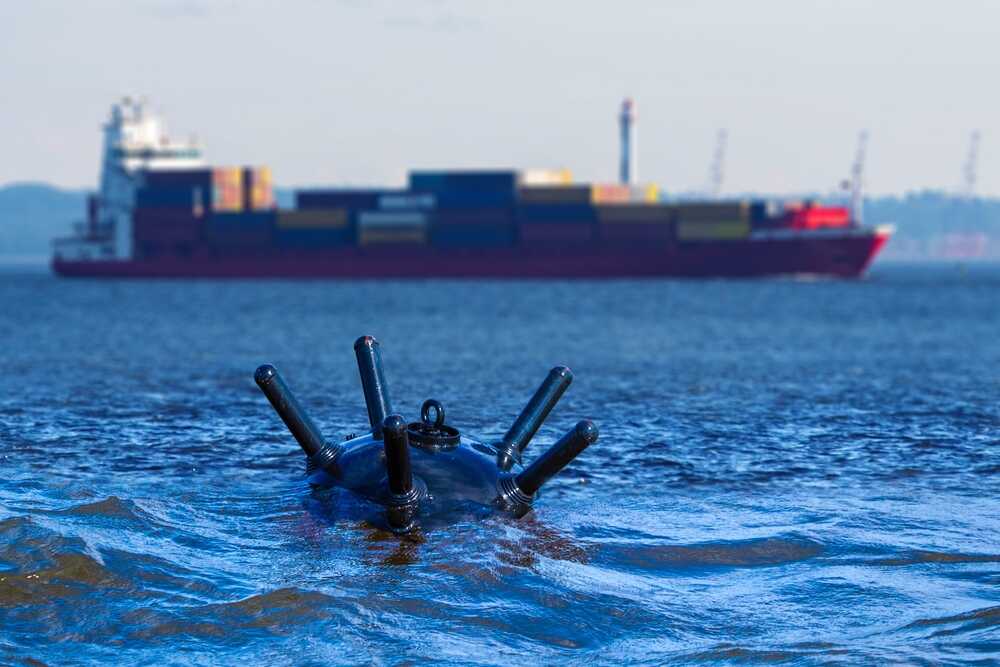
Iran’s stockpile of up to 6,000 sea mines, deployable by hundreds of small boats, could cripple U.S. warships and spike energy prices, trapping America in yet another endless foreign entanglement despite Trump’s promises.
Story Snapshot
- Iran holds 5,000-6,000 naval mines, each costing as little as $1,500, capable of damaging multi-billion-dollar U.S. vessels.
- IRGC uses high-speed boats to deploy mines in the Strait of Hormuz, choking 20% of global oil supply and threatening American sailors.
- Mines caused 77% of U.S. Navy ship casualties since 1950, highlighting vulnerability amid 2026 escalations.
- Recent deployments of Maham 3/7 mines in March 2026 retain 80-90% of Iran’s minelaying fleet, deterring shipping without full war.
- Trump’s second term faces MAGA divide over avoiding regime-change wars while protecting energy security and constitutional priorities at home.
Iran’s Massive Mine Arsenal Threatens U.S. Naval Superiority
U.S. intelligence estimates Iran possesses 5,000 to 6,000 naval mines, including drifting, moored contact types, and advanced bottom-influenced models like EM-52. The Islamic Revolutionary Guard Corps (IRGC) amassed this stockpile from Soviet, Russian, Chinese, and North Korean sources following the 1980s Tanker War. These low-cost weapons, priced at $1,500 each, target billion-dollar warships and tankers transiting the Strait of Hormuz. Historical data reveals mines inflicted 77% of U.S. Navy ship casualties since 1950, underscoring persistent risks to American forces deployed abroad.
IRGC Small-Boat Swarms Enable Rapid Mine Deployment
IRGC Navy deploys mines via hundreds of high-speed small boats, fishing vessels, and dhows in the shallow Strait of Hormuz, a narrow chokepoint for 20% of global oil. U.S. Defense Intelligence Agency’s 2019 report details this rapid minelaying tactic. In March 2026, intelligence confirmed at least a dozen Iranian Maham 3 and Maham 7 limpet mines placed there, with Iran retaining 80-90% of its small boats and minelayers. These acoustic and magnetic-sensor mines lie on seabeds or moored, making clearance extraordinarily difficult in three dimensions plus time. Even the threat deters commercial shipping, mimicking a blockade per 2009 CIA analysis.
2026 Escalations Amid Proxy Threats and U.S. Strain
Early April 2026 updates show Iran threatening to expand mining to the Persian Gulf, Red Sea, and Bab al-Mandeb using Houthi proxies, as in their 2017 Yemen operations. UNMAS expert Paul Heslop notes the massive pre-conflict stockpile and ease of small-boat deployment, with no exact usage figures confirmed. IRGC commanders drive these asymmetric tactics for economic disruption and deterrence against U.S. superiority. Meanwhile, American carriers like the USS Gerald R. Ford face internal strains from extended deployments, diverting focus from core threats. Conservative Americans demand Trump prioritize no new wars, echoing frustrations with high energy costs and overextended military budgets.
Experts like Elie Tenenbaum of IFRI affirm the 5,000-6,000 mine count, with drifting types posing the main Hormuz danger via speedboats. RAND’s Scott Savitz emphasizes mines’ potency over missiles in snapping ships. John Femiani details Maham 3’s delayed detonation for high-value targets post-sweeps. Strauss Center highlights limitations in Iran’s submarine expertise and deployment platforms, though small-boat threats remain pessimistic per DIA assessments.
Economic and Strategic Fallout for American Families
Short-term disruptions in Hormuz spike oil prices, hitting U.S. consumers already burdened by past inflation and energy dependence. Long-term proxy mining risks global trade paralysis, surging maritime insurance and shifting naval operations to costly countermeasures. Gulf states and worldwide buyers suffer, but everyday Americans face higher gas bills amid endless entanglements. Trump’s administration must uphold America First by avoiding regime-change pitfalls, safeguarding limited government and family budgets over foreign adventures that erode constitutional focus on domestic security.
Sources:
Arab News: Iran mine deployments in Strait of Hormuz
Ynetnews: Iran’s sea mine stockpile analysis
Arab News JP: Maham mines and IRGC tactics
Strauss Center: Strait of Hormuz mines assessment
H.I. Sutton: Iranian naval mines specifications
Fortune: Iran war sea mines impact on oil
China Russia Report: Naval mining Strait of Hormuz
CIA Declassified: Mine deterrent effects