

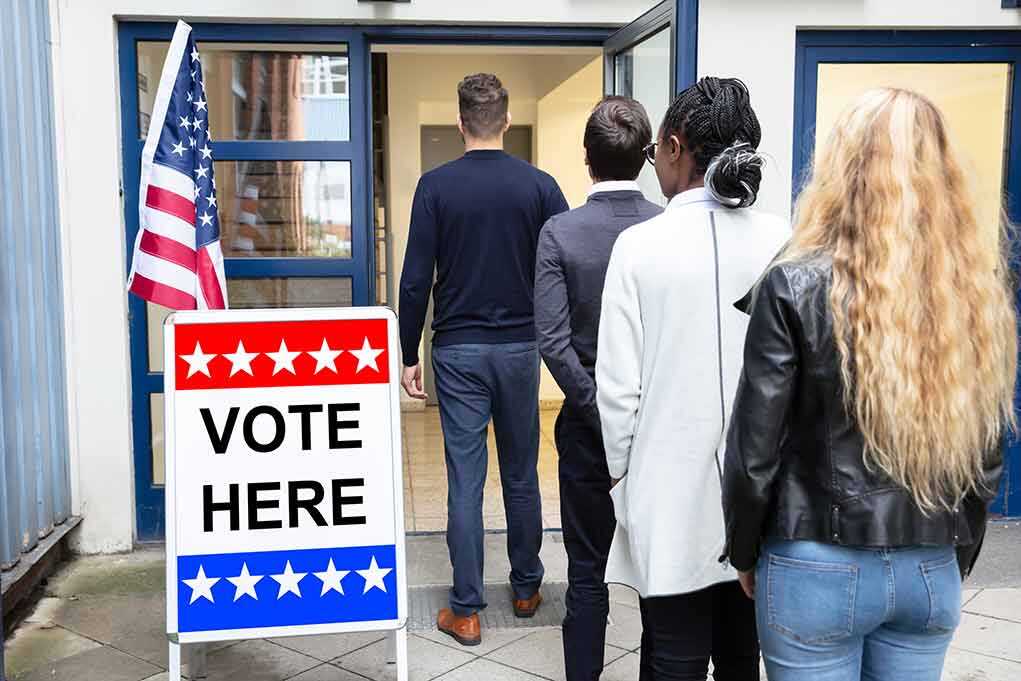
National polls point to a possible Democratic surge, and Republicans must out-hustle it with turnout now.
Story Highlights
- Several national polls show Democrats leading in the generic House vote and President Trump’s approval in the 30s.
- Surveys report Democrats are more motivated to vote, with many saying they want Congress to check Trump.
- Republican strategists say strong Republican turnout can contain losses, especially in red and working-class areas.
- Historical midterm patterns punish the president’s party, but seat gains depend on district-level turnout, not headlines.
What The Latest Polls Actually Show
Pew Research Center reported Democrats ahead 44% to 36% on House vote preference and measured President Trump’s approval at 30%, while nearly two-thirds said Trump was a factor in their vote. ABC News, The Washington Post, and Ipsos measured a Democratic edge among likely voters, and other national outlets found similar advantages. An NPR survey found majorities prefer a Congress that checks the president’s agenda rather than helps pass it, underscoring the challenge Republicans face in a nationalized race.
Politico reported nearly half of Democratic midterm voters planned to vote mainly to oppose Trump, while fewer Republicans said they were voting mainly to support him. CNBC described low economic approval for the president, adding more headwinds in the narrative. Polls vary by method and date, but the direction is consistent: Democrats hold a national lead and are more engaged. That does not forecast specific seats, but it frames the fight in the closing stretch.
Why A “Blue Wave” Is Not Inevitable
National polling is not a map. It cannot tell us who wins close districts or key Senate states. Even friendly surveys admit enthusiasm does not always become votes, and motivation can cluster in safe blue areas rather than battlegrounds. History shows unpopular presidents often see losses, but the size depends on the ground game and who turns out where. That means Republicans can still change outcomes by mobilizing core voters and narrowing gaps in the places that decide control.
Republican strategists argue that turnout can blunt any surge. CNN’s reporting highlighted the plan to energize voters without college degrees in competitive states, a group that powered Trump in past cycles. USA Today quoted strategist Colin Reed saying Republicans can overcome national polling by turning out their base, with rallies helping match Democratic enthusiasm. Reuters found many Republican activists still see benefit in keeping Trump central because he motivates their voters, even if he is polarizing overall.
The Stakes For Policy And Freedom
NPR’s polling found most voters favor a Congress that checks President Trump rather than advances his agenda. For conservatives, that means real risk to border security action, energy independence steps, and the push to rein in federal overreach. A Democratic Congress would try to block deregulation, stall conservative judges, and revive Biden-era approaches that raised energy costs and rewarded illegal immigration. Voters who want secure borders, lower prices, and parental rights cannot sit out a midterm shaped by turnout.
Democrats frame this election as a referendum on Trump, and surveys show that message is resonating with their base. But the same national focus can wake up Republican voters who see what is on the line: the right to defend your family, a government that answers to citizens, and a budget that stops punishing savers and workers. Republicans do not need to win every district. They need to win the ones that matter by showing up.
What Republicans Must Do Now
Campaigns must target proven supporters with clear calls to vote early or on Election Day, especially in working-class counties and exurbs where motivation lags. Church networks, parent groups, veteran circles, and small-business owners can remind neighbors that this is about the House seat down the road, not a cable-news poll. The message should be simple: secure the border, cut spending, unleash American energy, defend the police, and protect the Second Amendment. Turnout turns that message into power.
Strategists also stress discipline in the final days. Talk about costs, crime, and classrooms. Contrast policies, not personalities. Cut through media spin that declares a wave before ballots are counted. Use President Trump’s rallies and surrogates to lift counties that decide close races, while local candidates meet voters where they live and work. Polls tell us the stakes. Voters decide the result. A surge on our side closes the gap and can hold the line.
Bottom Line
Polls show Democrats ahead and fired up, with many aiming to check President Trump’s agenda. History warns the president’s party usually loses ground when approval is low. But elections are not averages; they are turnouts. If Republicans vote like freedom, family, and security are on the ballot, they can stop a so-called wave and keep the fight for American values in the people’s hands.
Sources:
youtube.com, npr.org, usnews.com, abcnews.com, politico.com, apnews.com, cnbc.com, pewresearch.org, thirteen.org, mufgamericas.com