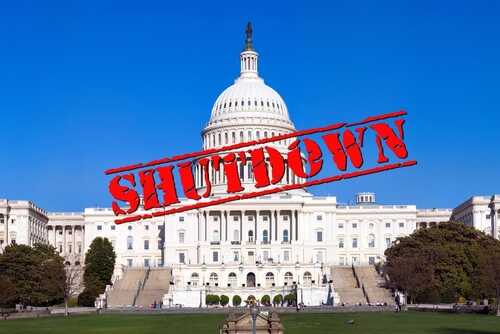
A new compromise ends the longest government shutdown, offering relief to federal workers while sparking debate over unresolved issues.
Story Highlights
- President Trump supports a bipartisan Senate deal to end the longest government shutdown in U.S. history.
- The agreement guarantees back pay for furloughed workers and reverses layoffs.
- Democratic demands on health care remain unmet, highlighting ongoing partisan tensions.
- The bill needs approval from the House and President Trump to finalize.
Senate Reaches Compromise to End Shutdown
On the 40th day of the longest government shutdown in U.S. history, Senate negotiators reached a bipartisan agreement aimed at reopening federal agencies. The deal promises funding through the end of fiscal 2026 for some agencies, while others will be funded through January. A key component of the agreement includes guarantees of back pay for furloughed workers and the reversal of thousands of layoffs initiated during the shutdown.
President Trump signals support for Senate agreement to end shutdown: ‘I’ll abide by the deal’https://t.co/PMYHPq5jjo
— The Hill (@thehill) November 10, 2025
Despite the breakthrough, the agreement does not address all demands from Democrats, particularly regarding health care premium increases. This gap has led to mixed reactions within the Senate, where some Democrats expressed concerns over the insufficiency of protections for federal employees. The deal’s advancement in the Senate signifies a potential end to the shutdown, contingent upon the House’s approval and President Trump’s signature.
President Trump’s Support and Public Reaction
President Trump has publicly indicated his willingness to support the Senate’s bipartisan agreement, stating he will “abide by the deal.” This endorsement is crucial for the agreement’s progression, as the President’s approval is necessary for the bill to become law. House Speaker Mike Johnson (R-La.) plays a pivotal role in steering the bill through the House, where its passage is anticipated within the week.
The shutdown, characterized by its significant economic and social impacts, has drawn public and political pressure for resolution. The agreement’s provision for back pay and reversal of layoffs offers immediate relief to federal workers, but unresolved health care issues suggest potential future conflicts.
Watch: President Trump on Deal to Reopen Government: “I’ll abide by the deal.”
Implications for the Future
The bipartisan agreement, while ending the current shutdown, sets the stage for potential budgetary conflicts in January when the continuing resolution expires. The unresolved issue of health care funding, particularly premium increases, remains a point of contention that may resurface. The deal reflects a necessary compromise to end widespread disruption, but it underscores the ongoing partisan divide over fiscal policy and government spending.
As federal workers return to their positions, the broader implications of this shutdown and its resolution will continue to influence political dynamics. The economic and social impacts have highlighted the necessity of stable government funding and the potential consequences of recurring shutdowns on public trust and federal workforce morale.
Sources:
GovExec: Senate moves shutdown-ending deal that would ensure backpay and unwind some federal layoffs