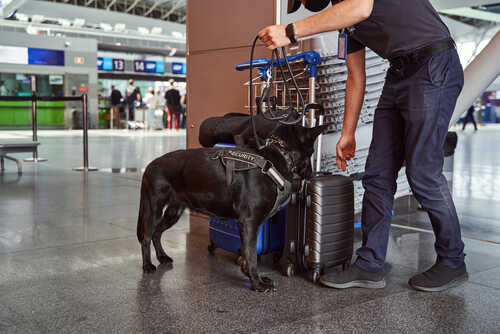
Could a new air scanner finally put an end to the decades-long reliance on drug-sniffing dogs at U.S. borders?
At a Glance
- The VaporID air scanner may soon replace drug-sniffing dogs at U.S. borders.
- Developed by the Pacific Northwest National Laboratory, it detects narcotics and explosives in real time.
- Field trials showed remarkable success in detecting fentanyl and cocaine in seconds.
- BaySpec is commercializing the technology for broader deployment.
Innovation in Border Security
U.S. borders might be on the brink of a major technological upgrade with the introduction of the VaporID air scanner. Developed by the Pacific Northwest National Laboratory, this device is a game changer in detecting narcotics and explosives. Unlike traditional drug-sniffing dogs, which have served well but are limited by fatigue and the need for constant retraining, VaporID offers a faster, more sensitive solution. It utilizes cutting-edge miniature mass spectrometry and atmospheric flow tubes to identify trace levels of illicit substances almost instantaneously.
This new air scanner could replace drug dogs at US borders https://t.co/RXxdq8fh3p pic.twitter.com/xAT25s7b5k
— FreddieMac (@FreddieMac214) July 22, 2025
Field trials at the Nogales, Arizona border crossing have already demonstrated the VaporID’s capabilities. The device detected fentanyl, cocaine, and other dangerous drugs in mere seconds. This advancement is timely, given the escalating opioid crisis that claimed over 80,000 American lives in 2024 alone, with synthetic opioids like fentanyl being the main culprits. The need for such technology is crucial as the sophistication of drug trafficking continues to outpace traditional detection methods.
Stakeholders and Deployment
The development and deployment of VaporID involve several key players. The Pacific Northwest National Laboratory is at the forefront of the technology, while California-based BaySpec is tasked with its commercialization. The U.S. Customs and Border Protection, the primary end user, faces the critical decision of adopting this technology to enhance border security. The Department of Homeland Security is also interested in broader applications, from mail screening to airport security. Meanwhile, canine handler units may face changes in their roles, as VaporID could reduce the reliance on drug-sniffing dogs.
As the VaporID moves towards commercialization, BaySpec is collaborating with the Department of Homeland Security to expand its use to other security checkpoints, including mail and cargo inspections. The device’s portability, weighing around 40 pounds, makes it suitable for various settings, promising faster processing times and improved security measures without the need for hands-on human intervention.
Impact and Implications
The introduction of VaporID at U.S. borders could significantly enhance detection capabilities, intercepting more illicit substances before they enter the country. This improvement could disrupt drug trafficking routes, especially those dealing in synthetic opioids. The adoption of VaporID may also serve as a technological precedent, encouraging the use of AI-driven and sensor-based detection systems in other security areas. However, as with any technological advancement, there are potential concerns about privacy, reliability, and the implications of reduced roles for canine units.
Long-term, the wider adoption of VaporID could enhance national security by extending its applications to airports and cargo inspections, ensuring that the nation’s critical infrastructure remains protected. The technology could also provide economic benefits by reducing costs associated with canine training and maintenance, although there may be initial expenses related to acquiring and maintaining the new technology.