
Health Secretary Robert F. Kennedy Jr. tried to warn Americans about the Muslim Brotherhood’s influence, but one sweeping and false claim about Arab achievement now threatens to bury that warning entirely.
Quick Take
- Kennedy told a Michigan rally that early Islamic civilization was a golden age of science, art, and tolerance before the Muslim Brotherhood’s 1928 founding changed things.
- He then claimed “500 million Arabs” don’t produce science, a statement fact-checkers quickly disproved with named Nobel Prize winners.
- The Council on American-Islamic Relations demanded Kennedy’s firing, calling the remarks bigoted.
- Media coverage focused almost entirely on the false science claim rather than Kennedy’s underlying argument about the Muslim Brotherhood.
What Kennedy Actually Said
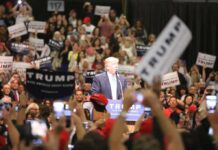
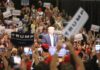
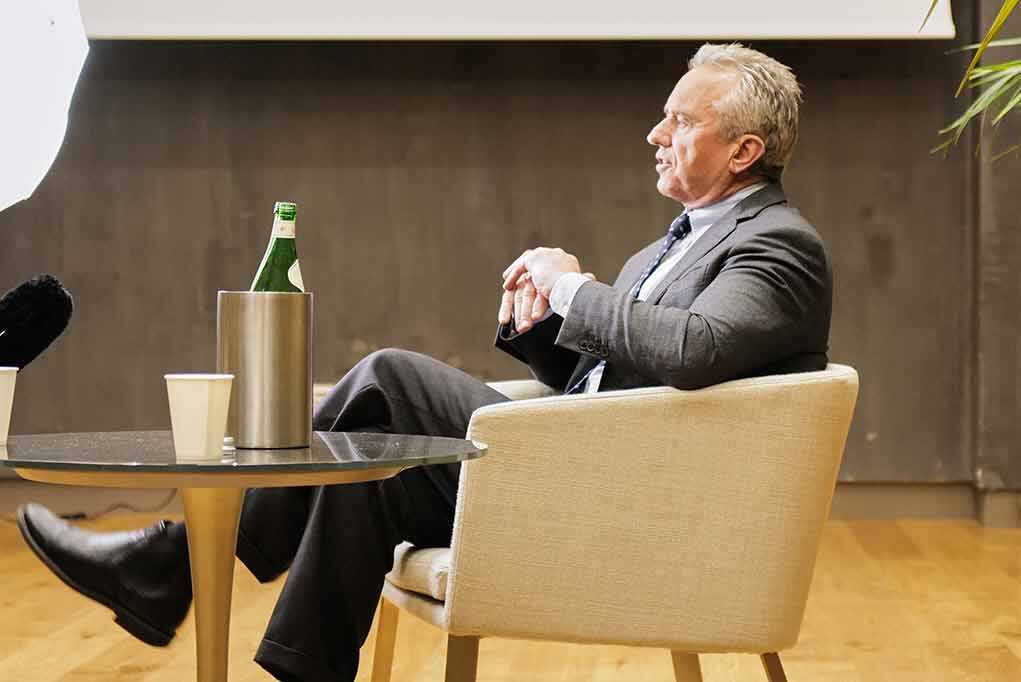
Health Secretary Robert F. Kennedy Jr. spoke at a Trump campaign rally in Grand Rapids, Michigan. He described early Islamic civilization as the “center, the foundation for art and literature and science and engineering,” calling it “highly tolerant and pluralistic and cosmopolitan.” Kennedy said that changed after the Muslim Brotherhood formed in 1928, calling it “a new ideology that departed from traditional Islam in a very, very dangerous way.”
Kennedy argued the group’s rise explains why some Arab nations later stagnated under less open governments. The full rally video gives everyone a chance to watch exactly what he said and how he said it, word for word. Then came the line that sparked the firestorm: “There’s 500 million Arabs in the world, and yet they don’t produce science.” That single sentence is where the backlash exploded.
The Nobel Prize Problem
Fact-checkers moved fast after the rally. Egyptian-American chemist Ahmed Zewail won the 1999 Nobel Prize in Chemistry. Novelist Naguib Mahfouz won the Nobel Prize in Literature in 1988. Tawakkol Karman shared the Nobel Peace Prize in 2011. Those three names alone knock down Kennedy’s claim. Conservatives who want to make a serious point about Islamist ideology need facts that actually hold up under scrutiny.
Kennedy’s wording also blurred two very different things. “Arab” describes an ethnic and language group. “Muslim” describes a religion. His remarks slid between “Arabs,” “Muslims,” and “Arab Muslims” as though they were the same population. That confusion made it easy for critics to attack the entire speech instead of engaging with his actual target, the Muslim Brotherhood.
Media and CAIR Pile On
The Council on American-Islamic Relations wasted no time responding. The group publicly demanded Kennedy’s firing, calling his remarks a “vile, bigoted” rant. Outlets across the country ran headlines branding the health secretary racist within hours. Coverage overwhelmingly zeroed in on the disproven science line rather than Kennedy’s underlying argument about the Muslim Brotherhood’s founding and spread across the Middle East.
US Health Secretary Claims Arabs Contribute Nothing to Science or Literature, Sparking Outcry
US Health and Human Services Secretary Robert F. Kennedy Jr. has sparked widespread criticism after claiming that Arabs and Muslims no longer make notable contributions to science and… https://t.co/BvXQsV2myx
— وصل للأخبار (@waslnew) October 29, 2026
That pattern feels familiar to conservatives who have watched the press cover past statements on radical Islam, crime, or immigration. A warning about an organized political movement gets buried under outrage over one bad sentence. The Muslim Brotherhood is a real organization founded in 1928 with a documented history of pushing political Islam into governments across the Middle East.
A Point Worth Making, Poorly Delivered
Kennedy wasn’t wrong that the Muslim Brotherhood changed the character of governance in parts of the Arab world. He wasn’t wrong that earlier Islamic civilization produced major scientific and cultural achievements. Where he went wrong was turning a specific critique of an ideological movement into a blanket statement about hundreds of millions of people, a mistake that handed his critics an easy win.
The episode is a reminder that sloppy rhetoric can sink a serious argument. Americans deserve an honest conversation about radical Islamist movements and their effect on free societies. That conversation gets harder every time a public official hands the media a factual error to attack instead of a real point to debate.
Sources:
zerohedge.com, thereporteronline.com, uk.news.yahoo.com, newarab.com, aol.co.uk