Canadian wildfire smoke has pushed Washington into unhealthy air, and the haze is a blunt reminder that the border does not stop bad policy or bad weather.
Quick Take
- Smoke from Canadian wildfires drifted into Washington, D.C., and triggered health warnings for the region.
- Officials said people should limit time outdoors and avoid unnecessary exposure.
- Reuters reported that hundreds of wildfires in Canada were sending heavy smoke across the Midwest and Northeast.
- Washington, D.C. has now faced repeated smoke events from Canada in recent years.
Smoke Shrouds the Capital Region
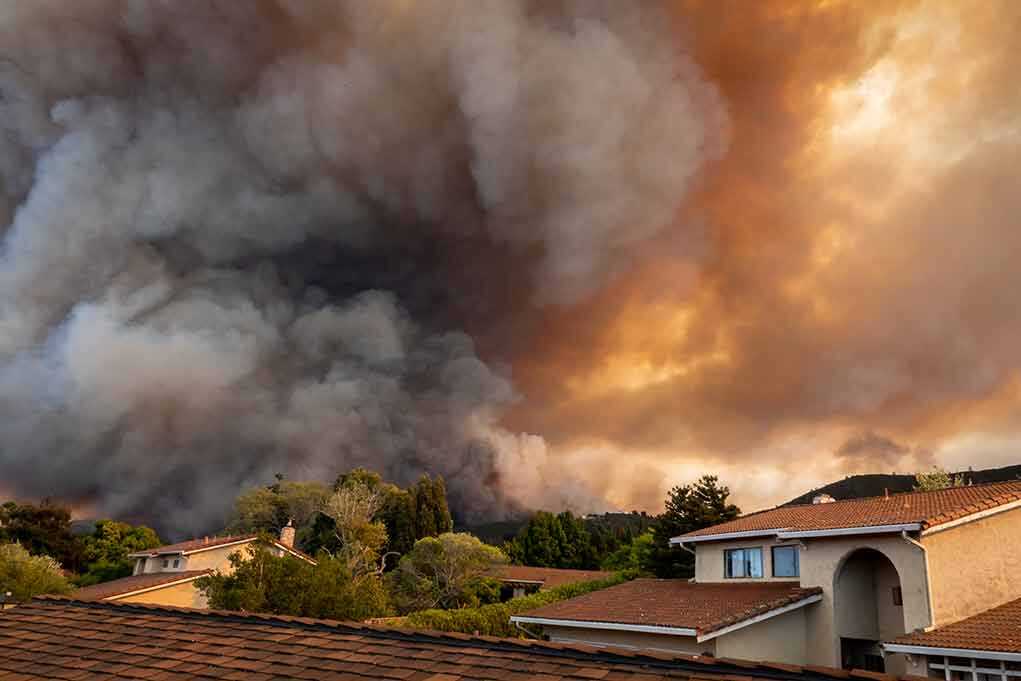
Washington, D.C. woke up Friday under a toxic-looking shroud from Canadian forest fires, with smoke settling over the city and nearby suburbs. The Washington Post said the haze covered the capital and prompted health advisories for people and animals to avoid unnecessary exposure. That warning came as smoke from fires in Minnesota and Canada spread across a wide stretch of the eastern United States, turning a distant wildfire problem into a local one.
The same pattern has played out before. The National Institutes of Health said D.C. area work sites felt the effects of Canadian wildfire smoke in June 2023, when the region recorded a rare Code Purple air alert and air quality reached roughly 220. A District of Columbia report also found a clear causal link between the Quebec wildfire smoke and local fine-particle pollution exceedances. For residents, that means the smoke problem is not abstract. It is measured in the air people breathe.
Officials Urge People to Stay Inside
Officials across the region have told residents to limit outdoor activity while the smoke lingers. Reuters reported that heavy smoke from hundreds of wildfires in Canada spread across the Midwest and Northeast, and officials warned people to stay indoors where possible and avoid the unhealthy air. The health advice is plain for a reason. Wildfire smoke carries fine particles that can irritate lungs, worsen asthma, and make outdoor exercise a bad choice when the air turns hazardous.
The current episode also fits a larger trend. Research cited by Climate.gov found that wildfire smoke affected air quality across the United States from 2018 through 2023, with 2023 standing out because of Canadian fires. Another long-term analysis described a broader continental shift toward smokier skies across North America. That is a serious issue for families who expect clean air, especially when summer heat already puts more strain on the body.
A Larger Pattern Across North America
Canadian wildfire smoke has not stayed in Canada, and it has not stayed in one region of the United States. Reuters, NASA, and other outlets have described smoke spreading from the Midwest and Great Lakes to the Northeast, with some episodes reaching as far south as the Mid-Atlantic. In one recent report, Washington, D.C. air quality sat far below the worst readings in the region, but still low enough to raise concerns for sensitive groups and older adults.
Canadian Wildfire Smoke Spreads Across Large Parts of U.S., Triggering Air Quality Alerts
Washington: Smoke from massive wildfires burning across Canada spread over large areas of the United States on Thursday, reducing visibility and prompting health officials to urge residents… pic.twitter.com/AWubGRklP8
— Voice of Germany (@NewsVOG) July 18, 2026
For conservatives, the bigger lesson is simple. When large-scale environmental problems cross borders, local families pay first, and government often reacts after the damage is already done. The facts here show a clear cause, a clear health risk, and a clear need for common-sense caution. Canadians are dealing with the fires too, but the smoke drifting into American cities underscores how quickly a foreign crisis can become an American health problem.
Sources:
bbc.com, npr.org, reuters.com, washingtonpost.com, pbs.org, science.nasa.gov, pmc.ncbi.nlm.nih.gov, acp.copernicus.org, repository.library.noaa.gov, pubs.acs.org