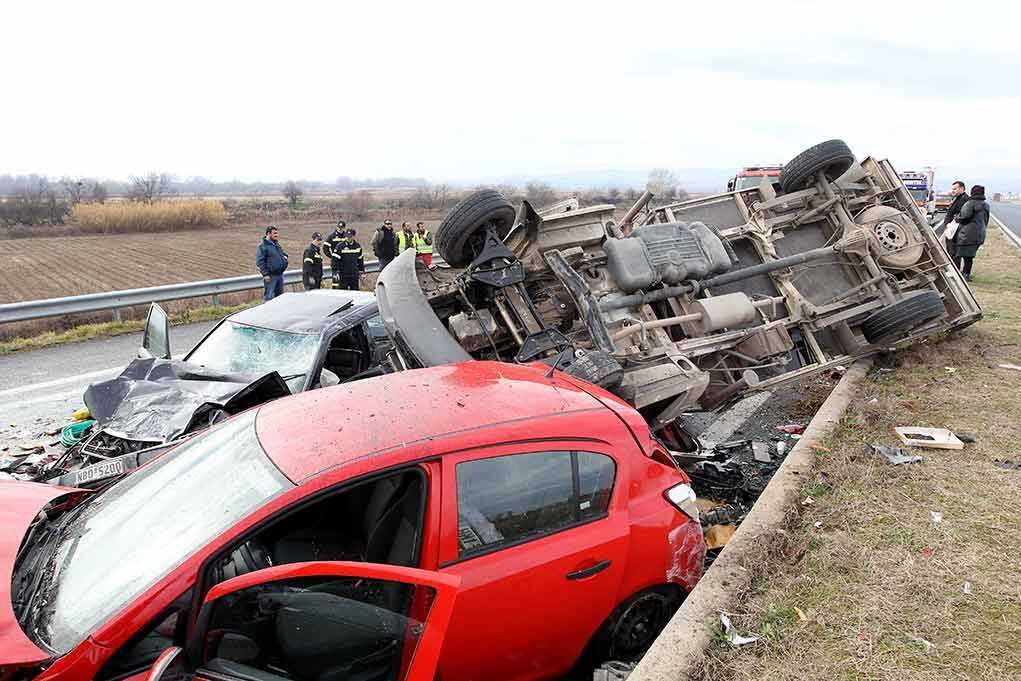
A new federal crackdown says more than 30 Americans died last year in fatal crashes tied to ineligible foreign commercial drivers.
Quick Take
- Federal transportation officials say 2025 brought at least 17 fatal crashes and 30 deaths tied to non-domiciled commercial driver’s licenses.
- The new rule sharply limits who can get these licenses and ends broad use of employment authorization documents.
- Congress held a hearing on the issue after reports of state licensing failures and deadly wrecks.
- Opponents say the record does not prove foreign-domiciled drivers crash more often than Americans.
Federal Rule Follows Deadly Crashes
The Department of Transportation said its new rule responds to a serious safety breakdown in commercial licensing. Officials said states had issued non-domiciled commercial driver’s licenses without properly checking driving histories, and they said that failure helped put unqualified drivers on American roads. The department also said at least 17 fatal crashes in 2025 caused 30 deaths, which is now the central number driving the policy fight.
The rule narrows eligibility to H-2A, H-2B, and E-2 visa holders, and it requires stronger federal verification before a state can issue or renew a license. Employment authorization documents no longer count as enough proof on their own. That marks a major change from the older system, which federal officials said allowed more than 30 states to issue tens of thousands of licenses to people who should not have received them.
Congress Turns the Issue Into a Public Safety Fight
The House Homeland Security Committee opened a hearing on what it called threats created by non-domiciled commercial driver’s licenses. Chairman Josh Brecheen said the issue had already produced real-world deaths and told lawmakers that the public should not treat it as a paperwork problem. The hearing materials framed the debate as a question of road safety, state compliance, and whether federal rules had been too loose for too long.
The hearing also gave supporters of tighter enforcement a chance to point to specific crashes that shocked the public. Reporting tied to the debate cited a Florida Turnpike crash that killed three people and other fatal wrecks involving drivers with non-domiciled licenses. For readers frustrated by years of weak borders and weak enforcement, the message from Washington was simple: licensing standards were supposed to protect the public, not create another loophole.
The Data Fight Is Not Over
Supporters of the crackdown say the deaths prove the old system failed, but opponents say the numbers do not settle the safety question. A written House testimony from Public Citizen argued that no studies show noncitizens cause more crashes than citizens, and Federal Motor Carrier Safety Administration materials have also been cited for saying there is not enough evidence to measure a clear safety difference.
That clash matters because it separates two very different questions. One question is whether states followed the law when they issued the licenses. The other is whether the immigration status of a driver caused a crash. The provided record supports the first concern more clearly than the second, since it shows federal officials found compliance failures and named deadly crashes, but it does not supply a full incident-by-incident ledger proving causation in every case.
California has also become a flashpoint in the broader dispute. Reporting on the state’s analysis said non-citizen or temporary-resident commercial drivers had fewer crashes and fewer fatal crashes per licensed driver than U.S. citizens. That finding is exactly why the fight has become so politically charged. Supporters of strict enforcement see a public safety rescue. Critics see a policy battle that may punish lawful drivers while leaving the deeper causes of roadway danger untouched.
Sources:
judicialwatch.org, landline.media, docs.house.gov, homeland.house.gov, govinfo.gov, jacksonlewis.com, facebook.com, ajc.com