
The most advanced missile Russia has ever fired at Ukraine lit up the night sky over Kyiv so brightly that cameras on the International Space Station could see the war from orbit.
Story Snapshot
- Russia hurled a hypersonic Oreshnik ballistic missile and swarms of drones at Kyiv in one of the war’s heaviest bombardments.
- Moscow framed the strike as “retaliation” for alleged Ukrainian attacks on civilian facilities inside Russian-held territory.
- Kyiv reported dead and wounded civilians, damaged homes, schools, and infrastructure, challenging the idea of a clean military response. [1]
- The photos and videos of the attack reveal a deeper story: high-tech intimidation, nuclear signaling, and the hard limits of “retaliation” as a moral defense. [1]
When A Missile Meant For Nuclear War Slams Into A Modern City
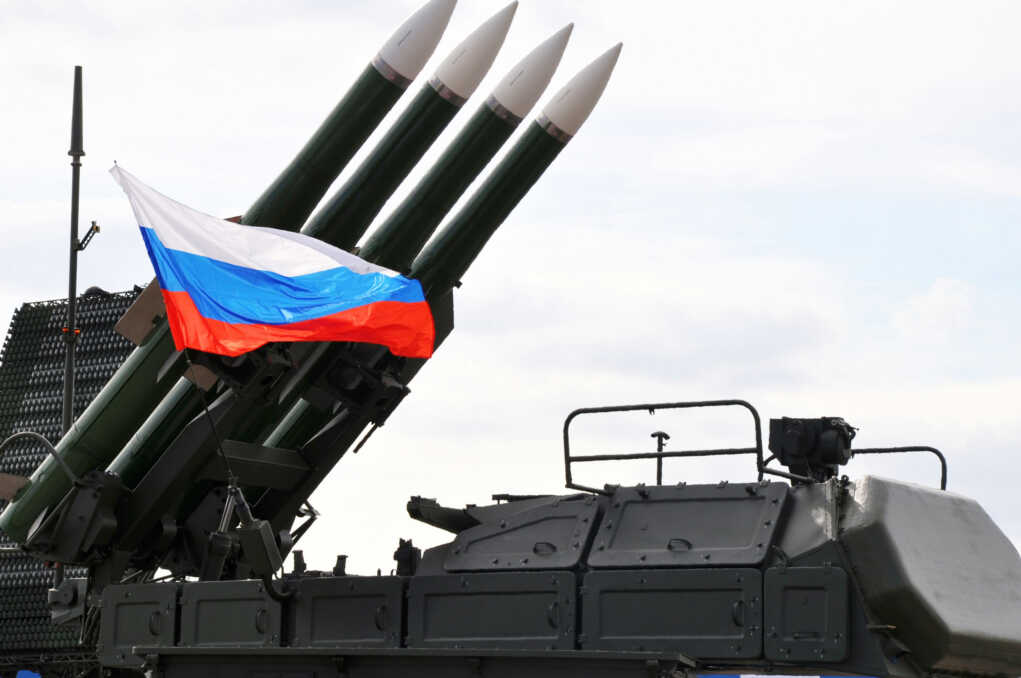
Russian forces did not just send another batch of old cruise missiles toward Kyiv; they fired the Oreshnik, a nuclear-capable hypersonic ballistic missile, as the centerpiece of a large overnight strike that also involved hundreds of drones and other munitions. [1] Analysts describe Oreshnik as a weapon built to race across continents and deliver nuclear warheads, not to “surgically” resolve a local battlefield dispute. Using it over a capital city says more about political messaging than battlefield necessity.
Footage from news outlets and astronauts alike captured the eerie pattern of launch flashes, incoming fireballs, and Ukrainian air defenses clawing at the sky, with some images shot from the International Space Station showing interception plumes above the dark curve of the Earth. [2][3] That kind of imagery matters. It turns an already brutal bombardment into a symbol: the world literally watches from space while a nuclear-capable delivery system is tested against a city full of civilians, power lines, and apartment blocks.
The Kremlin’s “Retaliation” Story Meets The Rubble On The Ground
Moscow’s official line presented the Kyiv strike as justified payback for Ukrainian drone attacks on what Russia called “civilian facilities on Russian territory,” including a reported hit on a college dormitory in Russian-occupied eastern Ukraine that allegedly killed at least 18 people. [1] Ukrainian officials denied targeting civilians, saying they struck a Russian drone unit in the Starobilsk area instead. [1] That clash of narratives set the stage for the Oreshnik launch: Russia claimed punishment, Ukraine claimed a pattern of terror against cities.
Kyiv’s emergency services and political leaders reported what you would expect when large ballistic missiles and drones slam into a metropolis: dead and wounded civilians, damaged residential buildings, hit schools, burning cars, and infrastructure fires. [1] Ukrainian President Volodymyr Zelenskyy described strikes on a water supply facility and other clearly civilian sites, while local police counted dozens of impact locations across the capital and nearby districts. [1] Even if some military or dual-use targets sat on the list, the blast radius of that “retaliation” undeniably reached families who never touched a drone control panel.
What Hypersonic Firepower Is Really Saying To The West
Carnegie Endowment analysis of earlier Oreshnik use in Ukraine describes these launches as part of a deliberate strategy of nuclear blackmail, designed to remind Europe and the United States that Russia can put advanced, potentially nuclear-tipped weapons over major cities at will. Russian messaging has explicitly linked such attacks to Western decisions allowing Ukraine to use long-range missiles against targets in Russia. In plain terms, the Kremlin aims to make Western voters ask: “Is helping Ukraine worth risking that kind of weapon over our own cities?”
From a conservative American perspective grounded in deterrence and strength, that tactic looks less like legitimate retaliation and more like coercive escalation. A state that truly wanted to de-escalate would present evidence about the alleged dormitory strike, invite independent inspection, and focus its response on unmistakable military targets. Instead, Russia chose a dramatic hypersonic showcase that maximized shock value, civilian fear, and international television impact. [1] That approach undermines its own claim to be the responsible actor simply “answering” Ukrainian aggression.
Photos, Smoke Plumes, And The Moral Fog Of Modern War
Photographs from Kyiv show the same grim pattern we have seen since 2022: orange fireballs punching into black sky, tracer arcs from air defenses, and, by dawn, rows of shattered windows and residents sweeping glass out of their kitchens. [1][3] Images of smoke columns over the capital after this attack echo earlier barrages, reinforcing the sense that whatever Russia calls its strikes, the lived reality for Ukrainians is recurring urban bombardment, not a narrow tit-for-tat exchange of blows.
Russia launches massive overnight missile/drone barrage on Kyiv, killing at least 4-9 & injuring dozens in retaliation for Ukrainian strikes. Hypersonic weapons & fires reported; one of the heaviest recent attacks on the capital. Conflict shows no signs of de-escalation. #Ukraine…
— Scripted World (@Milwyn1) May 25, 2026
Supporters of Moscow’s “retaliation” framing might argue that Ukraine opened the door by striking inside Russian-held territory, and that any serious war brings hard, ugly responses. Neutral observers, however, point out that lawful self-defense and raw vengeance are not the same thing. The more a side leans on weapons optimized for nuclear delivery, launched into dense civilian areas, and justified by contested claims about earlier incidents, the weaker its moral standing becomes against the standard of common sense: do not deliberately terrorize cities to make a geopolitical point. [1]
Sources:
[1] YouTube – Russia’s Deadly Oreshnik Hypersonic Missile Tears …
[2] YouTube – Russia strikes Kyiv with hypersonic Oreshnik ballistic missile
[3] YouTube – At least 4 dead after Russia fires hypersonic Oreshnik …